Serum vs Vital: Which Wavetable Synth Should You Buy in 2026?
TL;DR: Vital is the smarter pick for most producers in 2026 — its free tier is genuinely powerful, and its spectral morphing modulation gives it an edge in sound design depth. Serum remains the industry-standard choice if you need flawless preset compatibility, professional-grade CPU efficiency, and the widest third-party patch ecosystem on the market.
Quick Picks at a Glance
| Plugin | Price | Best For | Get It |
|---|---|---|---|
| Serum | ~$189 | Industry-standard wavetable, EDM, bass music | Plugin Boutique |
| Vital | Free / Paid tiers | Beginners, advanced sound design, budget-conscious producers | Plugin Boutique |
| Phase Plant | ~$99+ | Modular power users, hybrid synthesis | Plugin Boutique |
Introduction
The Serum vs Vital synthesizer comparison 2026 is arguably the most relevant debate in modern music production. These two wavetable synths dominate bedroom studios, professional sessions, and YouTube tutorials alike — and for good reason. Both deliver stunning visuals, deep modulation routing, and the kind of sound quality that was once reserved for hardware worth thousands of dollars.
Choosing between them isn’t simply about features on paper. It’s about your workflow, your budget, and how you actually make music. Serum has been the gold standard since 2014, shipping on virtually every professional EDM, pop, and film score session in the world. Vital arrived later as an open-source-inspired challenger, offering comparable depth with a free entry point that changed the game entirely.
This guide breaks down every major category head-to-head — oscillators, modulation, interface, value, and community — so you can spend less time researching and more time making tracks. By the end, you’ll know exactly which synth deserves a spot in your plugin folder.
Sound Engine & Oscillators
The heart of any wavetable synth is how it generates, morphs, and sculpts sound at the oscillator level. This is where the two instruments diverge most meaningfully.
Serum — The gold standard for pristine wavetable output
- Developer: Xfer Records (Steve Duda)
- Price: ~$189 (one-time) or via Splice subscription
- Platforms: Windows, macOS
- Formats: VST, VST3, AU, AAX
Serum’s dual oscillators use a high-quality anti-aliasing algorithm that produces an exceptionally clean, artifact-free sound even at extreme pitch ranges. The wavetable editor is the most tactile in the business — you can import audio, draw your own frames, or use FFT analysis to extract waveforms from samples with surgical precision. Its sub-oscillator and noise generator round out a signal chain that feels purposefully engineered rather than feature-padded.
Best for: Producers who demand studio-grade clarity, particularly in EDM, future bass, synthwave, and cinematic sound design.
→ Get Serum on Plugin Boutique
Vital — Spectral morphing changes what wavetable synthesis can do
- Developer: Matt Tytel
- Price: Free (Plus and Pro paid tiers available)
- Platforms: Windows, macOS, Linux
- Formats: VST3, AU, AAX, LV2
Vital introduces spectral morphing as a core oscillator feature — it can blend between waveforms in the frequency domain rather than just linearly crossfading, which produces noticeably richer, more organic-sounding transitions. It ships with three full oscillators (versus Serum’s two), each with independent wavetable position modulation. The built-in wavetable editor is slightly more approachable than Serum’s for beginners, though it lacks some of the advanced import tools.
Best for: Sound designers who want more modulation sources out of the box, Linux users, and producers who can’t justify a $189 price tag yet.
→ Get Vital on Plugin Boutique → Download Vital Free
Winner: Tie. Serum wins on output fidelity and import tools; Vital wins on spectral morphing depth and oscillator count.
Modulation System
Modulation is where synths reveal their true character. A deep, visual, easy-to-route mod system separates workhorses from toys.
Serum — Visual drag-and-drop modulation that set the template
Serum’s modulation system popularized the “drag the ring around any knob” approach that nearly every modern synth has since copied. It supports up to four LFOs, four envelopes, and a macro system that lets you tie multiple parameters to a single knob for performance or automation. The LFOs can be drawn freehand or synced to tempo with adjustable curve shapes. It’s comprehensive, visual, and — after a decade of tutorials — extremely well-documented.
Best for: Producers who value speed and a clean, well-understood routing paradigm.
Vital — More modulation sources, more complex routing
Vital ships with six LFOs (versus Serum’s four), four envelopes, a random mod source, and a dedicated audio-rate modulation system that allows one oscillator to modulate another at full frequency — effectively enabling FM synthesis within a wavetable framework. The modulation matrix has a visual connection map that makes complex routing readable at a glance. For deep experimental sound design, Vital’s system is genuinely more flexible.
Best for: Producers building complex, evolving textures or those coming from a modular synthesis background.
Winner: Vital. More sources, audio-rate modulation, and a cleaner matrix view give it a measurable edge.
Interface & Workflow
Both synths are industry favorites partly because they look good. But sustained sessions reveal real differences in how each one handles daily production tasks.
Serum — Familiar, proven, endlessly documented
Serum’s interface is divided into clean tabs — OSC, FX, LFO, ENV, MATRIX, GLOBAL — and has barely changed since launch. That stability is a feature: there are thousands of tutorials, thousands of presets built with its layout in mind, and virtually no learning curve if you’ve ever watched a beginner tutorial. CPU usage is famously efficient even when running multiple instances in a project.
Best for: Producers who need a reliable, battle-tested tool that works the same way it did five years ago.
Vital — A steeper first session, bigger long-term payoff
Vital’s interface packs more visible complexity: three oscillators, three filters, and a modulation map are all on one screen. The first session can feel overwhelming. But once the layout clicks, the payoff is fast iteration — you rarely need to switch tabs to make a connection. Vital’s filter options are notably deeper than Serum’s, with comb, formant, and ladder models available alongside the standard morphing filter.
Best for: Producers willing to invest a few hours upfront for a more expressive long-term tool.
Winner: Serum (for workflow speed); Vital (for filter and interface density per screen).
Preset Library & Community
The ecosystem around a synth is often as important as the synth itself.
Serum — The most pre-patched synth on the planet
Serum’s preset library is enormous. Every major sound pack developer — from NI to Splice to independent designers — offers Serum patches. Its .fxp format is universally supported. Buying Serum in 2026 means instant access to a decade of professionally designed sounds across every genre imaginable.
Best for: Producers who rely heavily on pre-built starting points or who purchase third-party sound packs.
Vital — A growing free ecosystem, strong open-source community
Vital’s open-source-adjacent ethos spawned a large community of designers sharing presets freely on Vital’s website and Reddit. The paid tiers include professionally curated packs. While the total library size doesn’t match Serum’s decade of commercial releases, the quality ceiling is comparable and the free access is genuinely exceptional.
Best for: Producers who prefer community-driven resources and want a free starting library.
Winner: Serum — sheer volume of professionally produced patches remains unmatched.
Price & Value
Serum — Premium price, premium pedigree
At approximately $189 one-time (or available via Splice subscription), Serum isn’t cheap. But its longevity, stability, and commercial ubiquity make it one of the safest investments in a plugin folder. It has received consistent free updates for over a decade, and Serum 2 has been in development — owners of the original are expected to receive upgrade pricing.
Best for: Producers treating their plugin folder as a long-term professional investment.
Vital — Unbeatable free-to-paid progression
Vital’s free tier is not a crippled demo. It includes the full synthesis engine, a solid preset library, and all core features. The paid tiers unlock more presets, wavetables, and community features. For producers at any budget level, Vital offers a legitimate path from zero-cost to professional-tier without changing tools.
Best for: Beginners, budget-conscious producers, and anyone who wants to test before committing.
Winner: Vital — the free tier alone makes this a no-brainer starting point.
Worth Upgrading To
Once you’ve outgrown the standard wavetable paradigm, these tools push synthesis to the next level.
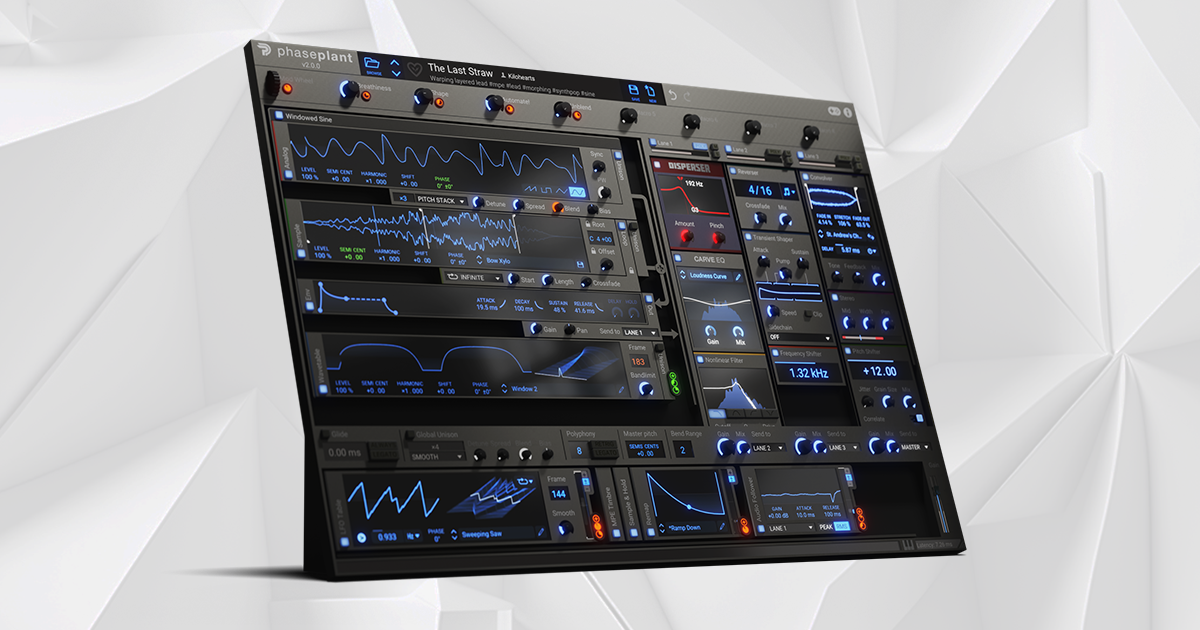
Phase Plant — Modular synthesis without the cables
- Developer: Kilohearts
- Price: ~$99+ (as part of Kilohearts Toolbox or standalone)
- Why upgrade: Serum and Vital are fixed-architecture instruments. Phase Plant is fully modular — you combine wavetable, granular, and additive oscillators with custom signal chains. If you find yourself wishing Serum let you stack oscillator types or route signals in non-standard ways, Phase Plant removes every constraint.
→ Get Phase Plant on Plugin Boutique
Serum (Full License) — Upgrade from the Splice subscription
- Developer: Xfer Records
- Price: ~$189 one-time
- Why upgrade: If you’ve been using Serum via Splice and want to own it outright — plus stop the monthly fee — buying the full license makes financial sense by month 10. Ownership also future-proofs you against subscription model changes.
→ Get Serum on Plugin Boutique
Full Comparison Table
| Plugin | Price | Type | Highlights | CTA |
|---|---|---|---|---|
| Serum | ~$189 | Wavetable | Best-in-class audio quality, massive preset ecosystem, industry standard | Buy |
| Vital | Free / Paid tiers | Wavetable + Spectral | Free full engine, 6 LFOs, FM-capable, Linux support | Get Free / PB |
| Phase Plant | ~$99+ | Modular/Hybrid | Fully modular signal path, wavetable + granular + additive | Buy |
How to Choose
- If you’re just starting out, go with Vital’s free tier — it’s a professional-grade engine with no upfront cost and no artificial limitations on the core synthesis.
- If you work in EDM, bass music, or synthwave professionally, buy Serum — its sound quality, CPU performance, and commercial preset ecosystem are unmatched for genre-specific workflows.
- If your DAW sessions regularly run 20+ instruments, choose Serum — its reputation for efficient CPU usage at scale is well earned.
- If you come from a modular or semi-modular background, Vital’s audio-rate modulation and deeper routing will feel more natural than Serum’s comparatively fixed architecture.
- If you’ve mastered both and want to go further, Phase Plant is the logical upgrade — it removes every architectural constraint both synths impose.
FAQ
Is Vital actually as good as Serum, or is it just a free alternative? Vital is genuinely competitive with Serum — not just “good for free.” Its spectral morphing, larger LFO count, and FM-capable modulation system give it real advantages in specific use cases. The free version alone is better than many paid wavetable synths.
Does Serum still get updates in 2026? Yes. Xfer Records has continued releasing updates, and Serum 2 has been in development. Existing owners are expected to receive favorable upgrade pricing when it launches. The original Serum still functions flawlessly on all current DAWs.
Can I use Vital on Linux? Yes. Vital supports Linux via VST3 and LV2 formats, which is a meaningful advantage over Serum, which officially supports only Windows and macOS.
Which synth is better for bass design specifically? Both excel at bass design. Serum has a slight edge for sub-heavy, clean bass patches thanks to its anti-aliasing quality. Vital’s aggressive distortion stack and filter variety can produce dirtier, more complex bass textures more naturally.
Is there a meaningful free trial for Serum before buying? No — Serum does not offer a free trial, though Splice subscribers can access it for a monthly fee without a full upfront commitment. This is one reason many producers start with Vital before purchasing Serum.
Final Thoughts
Start with Vital — upgrade to Serum when your workflow demands it. For the vast majority of producers in 2026, Vital’s free tier provides more synthesis capability than they’ll fully explore in the first year, and its paid tiers represent excellent value relative to the competition. If you’re working professionally in EDM or need the deepest commercial preset library available, Serum justifies every dollar of its price tag.
→ Download Vital Free at vital.audio | → Get Serum on Plugin Boutique
This post contains affiliate links. We may earn a small commission at no extra cost to you.
Related Guides
- Serum VST Review 2026: Is It Still the Best Wavetable Synth?
- Vital Synthesizer Review 2026: The Best Free Synth?
- Is Serum Worth It in 2026?
- 14 Best Free Synth VST Plugins in 2026 (Try Before You Buy)
- Phase Plant vs Serum: Which Wavetable Synth Wins in 2026?
This post contains affiliate links. We may earn a small commission at no extra cost to you.