u-he Plugins: Which Ones Are Worth Buying in 2026? (Diva, Repro, Hive)
TL;DR: u-he builds some of the most acoustically faithful virtual instruments on the market, and the lineup justifies the price for producers who are serious about synthesis. Diva is the community’s consistent top pick for analog warmth and vintage character; Hive 2 is the smarter buy if CPU efficiency matters more than circuit-level authenticity.
Quick Picks at a Glance
| Plugin | Price | Best For | Get It |
|---|---|---|---|
| u-he Diva | $179 | Vintage analog emulation | Official Site |
| u-he Hive 2 | $149 | Versatile sound design, low CPU | Official Site |
| u-he Repro-1 | $99 | Pro-One monosynth character | — |
| u-he Repro-5 | $149 | Prophet-5 polyphonic emulation | — |
| u-he Zebra2 | $199 | Modular/spectral synthesis | — |
Introduction
Here’s the uncomfortable truth about u-he’s pricing: none of their flagship synthesizers are cheap, none of them are on the major plugin storefronts, and yet they dominate “desert island synth” threads on KVR and r/synthesizers with a consistency that no marketing budget buys. That pattern tells you something real about the instruments.
The question of which u-he plugins are worth buying in 2026 is one the community has largely settled — the debate isn’t whether to own them, it’s which ones to prioritize when you can’t buy all of them at once. Diva, Repro, and Hive 2 occupy meaningfully different positions in the lineup, and the right choice depends on how you work, not how long your want list is.
This guide is for producers who have already read the headlines and want a direct answer. It covers the three most-discussed u-he synthesizers — Diva, Repro, and Hive 2 — with Zebra2 as a fourth option for producers pushing toward cinematic or experimental sound design. All four offer fully-functional 30-day trials directly from the developer, which the community consistently recommends taking seriously before purchasing.
The Core u-he Synthesizer Lineup
u-he Diva — The Benchmark for Virtual Analog
- Developer: u-he
- Price: $179
- Platforms: Windows, macOS
- Formats: VST, VST3, AU, AAX
Diva’s reputation rests on a single design decision: circuit-level emulation of classic analog hardware. Rather than modeling vintage synths at a behavioral level, Diva solves differential equations that mirror actual circuit behavior — which is why KVR’s synthesis community consistently describes it as “the closest thing to hardware without hardware.” The trade-off is CPU usage, and the developer documents it openly: Diva at its highest quality setting consumes substantially more processing resources than most comparable virtual analog instruments.
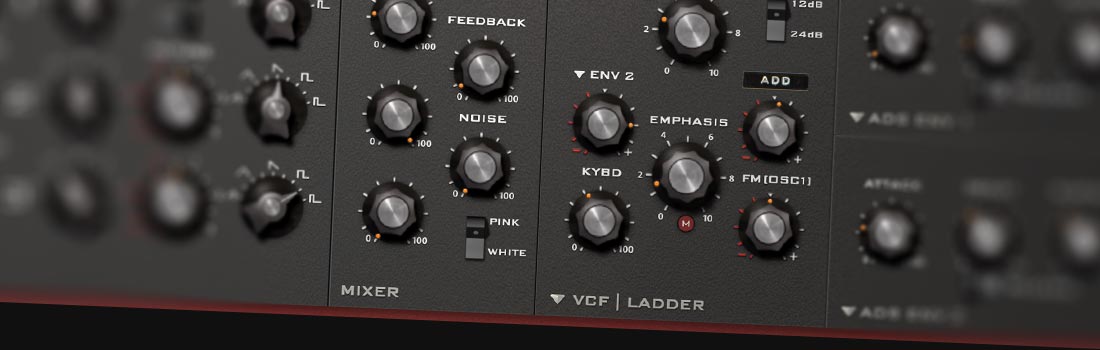
The interface is built around interchangeable modules, drawing on designs reminiscent of the Minimoog, Roland Juno, Roland Jupiter, and Korg MS-20, among others. Producers on r/synthesizers repeatedly note that sounds from Diva carry physical presence in a mix — bass lines, leads, and pads that have weight and movement rather than sitting flat. That quality is traceable directly to the circuit-modeling approach; it isn’t achievable by adding saturation after the fact.
u-he’s documentation recommends trialing Diva at medium quality settings first to get a realistic picture of its CPU behavior in your specific sessions. Most producers settle on medium quality for tracking and render at higher settings, which the plugin supports natively.
Best for: Producers who prioritize analog authenticity above all else and have the CPU headroom to run it.
→ Get u-he Diva on the Official Site
u-he Repro — Sequential Circuit Emulations Done Right
- Developer: u-he
- Price: Repro-1 $99 / Repro-5 $149
- Platforms: Windows, macOS
- Formats: VST, VST3, AU, AAX
Repro comes in two distinct instruments. Repro-1 is a circuit-accurate emulation of the Sequential Pro-One, a monophonic synthesizer from 1981 known for its aggressive filter character and punchy bass response. Repro-5 emulates the Prophet-5, one of the most influential polyphonic synthesizers of the analog era and a defining sound in pop, synth-wave, and film scoring. The developer’s documentation applies the same circuit-modeling philosophy as Diva — these are not behavioral approximations but attempts to replicate the electrical behavior of the original hardware.
The KVR community distinguishes Repro from Diva primarily by scope: Diva covers multiple hardware lineages through its modular architecture, while Repro goes deeper on two specific instruments. Producers who specifically need Prophet-5 or Pro-One character — classic bass lines, evolving polyphonic pads, or leads with that characteristic Sequential brightness — will find Repro more focused for those sounds and arguably more authentic within those specific tonal spaces.
Repro is not available through third-party storefronts, and no affiliate purchase link is provided here. The instrument can be trialed and purchased directly from u-he’s website.
Best for: Producers who specifically want Sequential-circuit character and are willing to pay for instrument-specific authenticity rather than a general-purpose virtual analog.
u-he Hive 2 — The Practical Choice in the u-he Lineup
- Developer: u-he
- Price: $149
- Platforms: Windows, macOS
- Formats: VST, VST3, AU, AAX
Hive 2 occupies a different position than Diva or Repro in the u-he catalog. Where those instruments are defined by circuit-modeling fidelity, Hive 2 is designed around workflow speed and session efficiency. The developer’s documentation describes it as a “streamlined” synthesizer, and the community on r/edmproduction consistently positions it as the u-he plugin best suited to fast, iterative sound design in active production sessions.
The synthesis architecture is hybrid: it combines wavetable, virtual analog, and phase modulation approaches in a single instrument. The CPU footprint is substantially lower than Diva’s, which makes it practical to run multiple instances simultaneously. Producers who have worked with both regularly note that Hive 2’s preset library skews toward modern synthesis — supersaws, plucks, punchy basses, and evolving pads suited to contemporary electronic production — while Diva’s library is weighted toward vintage character. That’s a product of the underlying design goals, not a quality difference.
Hive 2 does not attempt circuit-level analog modeling and doesn’t claim to. What it delivers is a versatile, capable synthesizer with u-he’s depth and build quality at a lower CPU demand and price point than Diva.
Best for: Producers who want a workhorse synth for contemporary sound design without the CPU overhead of Diva.
→ Get u-he Hive 2 on the Official Site
Worth Upgrading To
u-he Zebra2 — The Modular Option for Advanced Sound Design
- Developer: u-he
- Price: $199
- Why upgrade: Diva, Repro, and Hive 2 are all strong instruments within defined synthesis frameworks. Zebra2 opens a different category — a semi-modular spectral synthesizer that supports signal flow configurations and sound design directions the other three don’t cover. Its reputation in cinematic and experimental production communities is well-established: developer documentation and multiple production interviews confirm its use as a core tool in Hans Zimmer’s sound design workflow, and KVR’s synthesis community consistently places it among the most powerful software synthesizers available. If your work pushes toward textural, evolving, or cinematic territory, Zebra2 is an expansion, not a replacement.
No affiliate purchase link is available for Zebra2. It can be trialed and purchased directly from u-he’s website.
u-he Diva — When Analog Authenticity Is Non-Negotiable
- Developer: u-he
- Price: $179
- Why upgrade from Hive 2: Hive 2 is efficient and versatile, but it doesn’t attempt circuit-level analog modeling. If your productions depend on sounds with the physical warmth, subtle pitch drift, and tonal complexity that circuit emulation produces, Diva is the step up. The community is consistent on this: Diva behaves differently in a mix in a way that behavioral modeling doesn’t replicate.
→ Get u-he Diva on the Official Site
u-he Hive 2 — The Efficient Entry Point Into the u-he Ecosystem
- Developer: u-he
- Price: $149
- Why upgrade from free alternatives: Free virtual analog synthesizers are capable, but Hive 2’s modulation depth, preset library quality, and hybrid synthesis architecture represent a significant capability step for producers who have reached the ceiling of free options. The CPU efficiency makes it more practical to integrate into complex sessions than Diva.
→ Get u-he Hive 2 on the Official Site
u-he Repro — For Sequential-Specific Tones
- Developer: u-he
- Price: $99–$149
- Why upgrade: If you’ve been approximating Pro-One or Prophet-5 sounds with sample libraries or generic virtual analog synths, Repro’s circuit-modeling approach delivers something those tools fundamentally cannot — the dynamic, responsive character of the original synthesis engine under playing conditions. The difference is most audible in bass lines and polyphonic sequences where note interaction and filter behavior matter.
No affiliate purchase link is available for Repro.
Full Comparison Table
| Plugin | Price | Type | Highlights | CTA |
|---|---|---|---|---|
| u-he Diva | $179 | Virtual Analog | Circuit-level emulation, multiple hardware models, warmth | Buy |
| u-he Hive 2 | $149 | Hybrid (VA/Wavetable/PM) | Low CPU, fast workflow, modern preset library | Buy |
| u-he Repro-1 | $99 | Virtual Analog (Pro-One) | Sequential Pro-One circuit emulation, mono | — |
| u-he Repro-5 | $149 | Virtual Analog (Prophet-5) | Sequential Prophet-5 circuit emulation, poly | — |
| u-he Zebra2 | $199 | Semi-Modular/Spectral | Flexible routing, cinematic and experimental design | — |
How to Choose
- If you want the most accurate virtual analog instrument available and have the CPU budget for it, go with Diva. Community consensus is unambiguous — it’s the top recommendation for analog authenticity in software form.
- If you produce contemporary electronic music and need a versatile synth that won’t tax your sessions, Hive 2 is the practical pick. It has fewer compromises than its lower price and CPU profile suggest.
- If you specifically need Pro-One or Prophet-5 character, Repro is more focused than Diva for those tonal spaces and less expensive. The instruments overlap but aren’t interchangeable.
- If you’re making your first paid synthesis upgrade from free options, Hive 2 at $149 offers the clearest value proposition — capable enough to cover most production scenarios without requiring CPU management on every session.
- If your work pushes toward cinematic, textural, or modular sound design, Zebra2 operates in a category the other three don’t cover. It’s not a substitute for Diva; it’s a different kind of instrument altogether.
FAQ
Are u-he plugins worth the price in 2026? The community consensus across KVR, r/synthesizers, and r/edmproduction is yes — with the caveat that none of them are impulse buys. All u-he instruments offer fully-functional 30-day trials from the developer, which makes it straightforward to evaluate them in your actual sessions before committing.
Is Diva too CPU-heavy to be practical? The developer is transparent about Diva’s CPU demands, and the concern is legitimate. At its highest quality setting, Diva is demanding. At medium quality — which many producers use for tracking — it becomes significantly more manageable. Producers on modern multi-core systems report fewer issues; anyone on older hardware or running dense session configurations should trial it carefully before purchasing.
What’s the difference between Repro-1 and Repro-5? Repro-1 is monophonic, based on the Sequential Pro-One — it’s designed for bass lines, leads, and mono sequences where that circuit’s filter character is the goal. Repro-5 is polyphonic, based on the Prophet-5, and covers chords, pads, and the lush polyphonic sound that has appeared on thousands of recordings. They’re separate instruments sold individually; check u-he’s website for any current bundle pricing.
Does u-he offer sales or discounts? u-he runs periodic sales, most commonly toward the end of the calendar year. The 30-day fully-functional trial means there’s no urgency to buy at full price if you’re on the fence — use the trial, then time your purchase around a sale if one is active.
Which u-he plugin should a producer buy first? Hive 2 is the recommendation most frequently offered to producers newer to paid synthesis. Its interface is more approachable than Diva’s, the CPU demands are lower, and the preset library is well-suited to contemporary production without requiring deep synthesis knowledge to get usable results quickly.
Related Guides
- u-he Diva Review 2026: The Best Analog Synth Emulation?
- 12 Best Vintage Synth VST Emulations in 2026 (Moog, Roland, Oberheim)
- Best Synth VST Plugins 2026: Top 12 Picks Ranked
- Arturia V Collection 10 Review: 40+ Vintage Synths Worth the Price?
- Free Alternative to Valhalla Reverb: 8 Plugins That Get Close
Final Thoughts
u-he’s lineup holds up because the developer hasn’t chased trends — the circuit-modeling philosophy behind Diva and Repro produces instruments that the community returns to regardless of what else enters the market. Start with Diva if authenticity is the priority and your system can handle it; start with Hive 2 if you need flexibility, speed, and a lighter CPU footprint without leaving the u-he ecosystem.
→ Get u-he Diva on the Official Site | → Get u-he Hive 2 on the Official Site
This post contains affiliate links. We may earn a small commission at no extra cost to you.
This post contains affiliate links. We may earn a small commission at no extra cost to you.