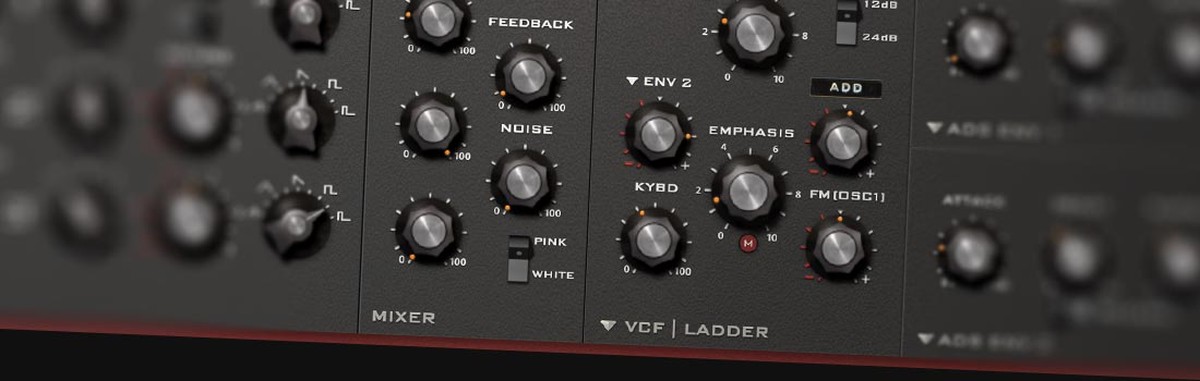
u-he Diva Review 2026: The Analog Synthesizer Emulation That Changed Everything
TL;DR: u-he Diva remains the most convincing analog synthesizer emulation in software — its circuit-level oscillator and filter modeling produces warmth, drift, and harmonic saturation that no preset bank can fake. At $179, it demands CPU headroom and a deliberate workflow, but producers who commit to it gain an instrument that genuinely bridges the gap between software and hardware.
Quick Picks at a Glance
| Plugin | Price | Best For | Get It |
|---|---|---|---|
| u-he Diva | $179 | Most authentic analog synthesis emulation | Plugin Boutique |
| Arturia V Collection 11 | $499 | Breadth of vintage instruments alongside analog depth | Plugin Boutique |
| Phase Plant | $99 | Modern modular and hybrid synthesis workflows | Kilohearts |
Introduction
Here is a fact that surprises most producers encountering the u-he Diva analog synth review 2026 conversation for the first time: Diva was released in 2011, and it still benchmarks above plugins that launched with far larger marketing budgets. The reason is not nostalgia — it is engineering. Diva does not use wavetables, hardware impulse captures, or behavioral snapshots. It runs differential equation models of actual analog circuits in real time, oscillator drift and all. That architectural decision defines everything about how the plugin sounds, how much CPU it consumes, and why competitors have spent fifteen years trying to close the gap.
Understanding that design choice matters in 2026 because the market for analog emulation has never been more crowded. Every major developer offers a Minimoog-style synthesizer. Several cost less than Diva. Some are bundled with DAW subscriptions. Yet professional productions continue to route through Diva specifically when the bass line or lead needs to hold up under close scrutiny — in mastering chains, on high-end monitors, in A/B comparison with hardware recordings. That outcome does not happen by accident.
This review is for electronic music producers, film composers, and sound designers who want to understand Diva at a technical and practical level, not just read a description of its preset categories. If you already own it and have never experimented beyond the default oscillator module, you will leave with a different relationship to the instrument. If you are evaluating it for the first time, you will have a clear-eyed picture of what you are buying, including where it genuinely falls short.
The Synthesis Engine
Oscillator Modules — Where Analog Character Actually Lives
- Developer: u-he
- Price: $179
- Platforms: Windows, macOS, Linux
- Formats: VST2, VST3, AU, AAX
Diva ships with five oscillator modules, each modeled from a distinct hardware lineage: Trivial (clean reference oscillator), Dual VCO (Minimoog-style), DCO (Roland Juno-60-style), Digital (DCO variant with different tuning behavior), and Triple VCO (Oberheim-inspired). Switching between them is not a cosmetic change. Each module introduces different tuning drift characteristics, harmonic content under overdrive, and cross-modulation behavior. A Dual VCO patch will breathe and wander in ways that a DCO patch deliberately will not, because that is how the original circuits behaved.
The “Bleed” parameter within the Dual VCO module allows oscillator audio to leak subtly into the pitch CV path, recreating a specific instability found in well-used vintage hardware. It sounds like a flaw on paper. In a mix, it sounds expensive — the kind of movement that producers used to pay for by the hour in studio rental time. That detail is representative of u-he’s entire approach: prioritizing perceptual accuracy over engineering tidiness.
Best for: Producers who want synthesis character that responds differently under every set of patch conditions, not a predictable tonal baseline.
→ Get u-he Diva on Plugin Boutique
Filter Models — Six Circuits, Six Personalities
Diva provides six filter architectures: Ladder (Moog), Cascade (Roland), Steiner-Parker, Bite (Korg MS-20-style), Uhbie (Oberheim SEM), and an Idealized multimode ladder. Each behaves differently under self-oscillation, drive, and fast envelope modulation. The Ladder filter self-oscillates into a clean sine with harmonic breakup at high resonance, consistent with hardware behavior. The Bite filter clips asymmetrically and introduces grit early in the resonance sweep — aggressive by design.
Mixing oscillator modules and filter types is where Diva’s sound design depth becomes a professional tool. A Triple VCO into a Steiner-Parker filter produces a character that most preset libraries never explore, because preset designers default to the obvious hardware-accurate combinations. Working through the less common pairings is where you find patches that are genuinely yours.
Best for: Sound designers who need filter behavior that changes fundamentally with patch architecture, not just a tone control responding predictably to a single knob.
Performance Modes — The CPU Reality Check
Diva’s most discussed feature outside of its sound is computational. The plugin offers four quality tiers: Draft, Fast, Perfect, and Divine. Draft is workable for real-time programming but sounds noticeably thinner and brighter than the higher modes. Divine is where the benchmark-quality output lives — the mode used in professional productions and in the recordings that established Diva’s reputation — and it requires meaningful CPU resources per instance.
In practice, most experienced Diva users compose in Fast or Perfect mode, then switch to Divine and bounce to audio before mixing. Treating this as a built-in workflow step rather than an inconvenience reframes the plugin entirely: you are not fighting a limitation, you are working with an instrument that rewards deliberate production habits. Producers who attempt to run multiple Divine-mode instances simultaneously without freezing tracks will have a bad experience that has nothing to do with the plugin’s actual capabilities.
Best for: Anyone willing to manage track freezing as a standard workflow habit in exchange for analog quality that survives direct A/B comparison with hardware recordings.
Use Cases in Production
Vintage Leads and Bass Lines — The Core Proposition
Diva’s reputation was built on bass lines and leads that translate the physical presence of the Minimoog into a DAW context. The Dual VCO module through the Ladder filter in Divine mode produces a low end that moves in a mix rather than sitting statically. Envelope response on the filter and amplifier feels snappy without becoming mechanical, because the models include the non-linearities in hardware VCA circuits that table-lookup emulations smooth away.
For leads, a detuned Dual VCO with slight portamento, Ladder filter at moderate drive, and filter cutoff envelope amount around 40% is a starting point that took producers years of hardware experience to land on reliably. The factory presets built around this configuration are not there to be used directly — they are reference points for understanding which parameters produce the most significant perceptual changes with velocity and modulation.
Best for: Electronic, synthwave, pop, and hip-hop producers building patches where the bass or lead carries the harmonic identity of the track.
Pads and Atmospheric Textures — The Underused Application
Most producers associate Diva with punchy monophonic patches. Its polyphonic pad performance is one of its least-promoted capabilities and one of its most consistent strengths. The Uhbie filter (Oberheim SEM model) has a warmth at low resonance settings that works well for slow-attack pads in ambient and cinematic contexts. Run with four or more voices slightly detuned and mild oscillator drift engaged, the result moves constantly without sounding unstable.
Diva’s modulation matrix supports rate-variable LFOs, envelope followers, and step sequencer sources, making evolving pad textures achievable without additional effects. The CPU caveat applies at higher voice counts in Divine mode — polyphonic pad patches benefit most from a freeze-before-mix workflow. The sonic payoff is pads that have genuine harmonic movement rather than the static quality of layered samples or wavetable textures held at fixed positions.
Best for: Ambient, neo-classical, and film composers who want pads that evolve harmonically over time without relying on post-processing to create the impression of movement.
Cinematic and Film Scoring — Where Analog Realism Earns Professional Value
Diva’s circuit modeling holds up under full-range studio monitoring, at high sample rates, in orchestral contexts where a digitally thin synthesizer immediately becomes audible against live instruments. The Cascade filter’s Roland character layers well under strings and brass. The Steiner-Parker filter allows formant shaping that fits in mixed ensemble contexts without requiring additional saturation or harmonic enhancement.
Composers working in film and television report that Diva’s Divine mode output often reduces the post-processing chain needed to make synthesized elements coexist with acoustic recordings. The harmonic complexity is in the source signal rather than added downstream. For productions where the synthesizer element needs to sit within an orchestral texture rather than dominate it, Diva’s behavior at moderate drive settings is a specific advantage over brighter, more aggressive analog emulations.
Best for: Film and TV composers, post-production sound designers, and producers working in hybrid acoustic-electronic contexts where synthesis needs to hold up next to live instruments.
Worth Upgrading To (Paid Options)
Arturia V Collection 11 — When You Need Breadth Alongside Depth
- Developer: Arturia
- Price: $499
- Why upgrade: Diva covers analog subtractive synthesis at exceptional depth but is architecturally focused on one type of instrument. V Collection 11 includes over 30 instrument emulations spanning synthesizers, organs, keyboards, and string machines — making it the natural companion purchase for producers who need stylistic range that Diva’s circuit-specific modeling cannot provide.
→ Get Arturia V Collection 11 on Plugin Boutique
Phase Plant — When You Need Modern Modular Alongside Vintage Analog
- Developer: Kilohearts
- Price: $99
- Why upgrade: Diva is purpose-built for analog circuit emulation — it does not handle wavetable synthesis, FM, or granular processing. Phase Plant fills that gap with a modular architecture suited to modern electronic music workflows. Producers working across multiple genres typically pair Diva for analog character with Phase Plant for synthesis that requires contemporary texture and spectral flexibility.
→ Get Phase Plant on Kilohearts
Full Comparison Table
| Plugin | Price | Type | Highlights | CTA |
|---|---|---|---|---|
| u-he Diva | $179 | Analog Circuit Emulation | Circuit-level modeling, 5 oscillator modules, 6 filter architectures, Divine mode | Plugin Boutique |
| Arturia V Collection 11 | $499 | Virtual Instrument Bundle | 30+ instrument emulations, wide stylistic and historical range | Plugin Boutique |
| Phase Plant | $99 | Modular Hybrid Synthesizer | Wavetable, FM, modular signal routing, modern workflow | Kilohearts |
How to Choose
- If you need the most authentic analog bass and lead sounds available in software, Diva in Divine mode is the current standard — no alternative produces the same combination of harmonic complexity and circuit-accurate response at this price point.
- If CPU budget is a firm constraint, work in Fast mode and freeze tracks before mixing; Diva’s Fast mode is still competitive with most alternatives’ best quality settings.
- If you need a wide range of vintage keyboard, organ, and synthesizer styles, Arturia V Collection 11 offers breadth that Diva’s architecture is not designed for — pairing both covers most production scenarios.
- If you primarily work in modern electronic genres where FM, wavetable, and granular synthesis dominate, Phase Plant will see more daily use than Diva and is the better first purchase.
- If you are scoring for picture, Diva’s harmonic realism in Divine mode makes it the better choice for synthesized elements that need to sit convincingly alongside live instrument recordings.
FAQ
Is u-he Diva still worth buying in 2026? Yes, for producers who prioritize analog authenticity. Circuit modeling as an architectural approach has not been superseded — competitors have narrowed the gap at lower price points, but Diva’s Divine mode output remains a benchmark. The use cases where it outperforms alternatives are specific and important: leads, basses, and pads that need to hold up under professional monitoring.
Why is u-he Diva so CPU-intensive? Diva runs real-time differential equation models of analog circuits rather than table-lookup approximations or hardware samples. In Divine mode, each voice calculates oscillator and filter behavior at multiple times the audio sample rate to avoid aliasing artifacts. This is computationally expensive by design — it is what produces the accuracy. The standard workflow response is to compose in Fast mode and switch to Divine before freezing tracks.
What hardware synthesizers does u-he Diva emulate? Diva models circuits from the Moog Minimoog (Dual VCO oscillators, Ladder filter), Roland Juno-60 and SH-101 (DCO oscillators, Cascade filter), Oberheim SEM (Triple VCO oscillators, Uhbie filter), Korg MS-20 (Bite filter), and Steiner-Parker (Steiner-Parker filter). These modules are recombineable — you can pair oscillator and filter models from different hardware lineages to create architectures no original hardware ever offered.
How does u-he Diva compare to Arturia’s individual synthesizer emulations? Arturia’s emulations are historically faithful to specific hardware instruments with lower CPU overhead per instance. Diva is architecturally flexible — the module-based approach allows hybrid patches that no hardware produced — and Divine mode modeling is generally considered more harmonically complex. For reproducing one specific historical instrument at a lower CPU cost, Arturia is competitive. For synthesis that moves beyond historical recreation, Diva has substantially more range.
Can u-he Diva be used for modern electronic music, or is it only for vintage-sounding productions? Diva’s analog character is present across genres from synthwave to contemporary techno, future bass, and commercial pop. The warmth it produces sits well in dense digital mixes precisely because it is not digitally thin. It is, however, not optimized for FM synthesis, wavetable-based spectral design, or granular processing — those workflows are better served by instruments built for those architectures.
Related Guides
- 12 Best Vintage Synth VST Emulations in 2026 (Moog, Roland, Oberheim)
- Arturia V Collection 10 Review: 40+ Vintage Synths Worth the Price?
- Best Synth VST Plugins 2026: Top 12 Picks Ranked
- 14 Best Free Synth VST Plugins in 2026 (Try Before You Buy)
- Serum VST Review 2026: Is It Still the Best Wavetable Synth?
Final Thoughts
u-he Diva is not the most approachable synthesizer and not the most CPU-efficient, but in 2026 it remains the instrument against which analog emulation in software is measured — and for productions where the bass line, lead, or pad needs to carry real harmonic weight, that distinction has direct commercial value. Learn the quality modes, build the freeze-before-mix habit, and the $179 investment returns in saved mix time and sounds that hold up wherever your music is heard. → Get u-he Diva on Plugin Boutique
This post contains affiliate links. We may earn a small commission at no extra cost to you.
This post contains affiliate links. We may earn a small commission at no extra cost to you.