Is Omnisphere Worth It in 2026? Honest Review After Using It for Years
TL;DR: Omnisphere remains the most community-endorsed all-in-one synthesizer for film scoring, ambient production, and cinematic sound design — at $499 with no subscription, the one-time cost is routinely cited on KVR Audio and Reddit as the best long-term value in premium soft synths. If your work demands evolving textures, a deep production-ready patch library, or Hardware Synth Integration, the purchase is well justified. If you primarily need aggressive EDM leads or are building your first studio, the investment may not be the right first step.
Quick Picks at a Glance
| Plugin | Price | Best For | Get It |
|---|---|---|---|
| Omnisphere 2 | $499 | Film scoring, cinematic pads, hybrid synthesis | Official Site |
| Keyscape | $399 | Realistic keyboard instruments, integrates with Omnisphere | Official Site |
| Serum | ~$189 | EDM leads, bass design, wavetable sound design | — |
| Vital | Free | Modern wavetable synthesis, no cost entry point | — |
| UVI Falcon | $349 | Deep modular hybrid synthesis | — |
Introduction
The question is Spectrasonics Omnisphere worth it in 2026 keeps resurfacing not because the plugin has declined, but because the free and budget alternatives have grown significantly more capable. Vital delivers sophisticated wavetable synthesis at no cost. Surge XT covers multiple synthesis architectures as open-source. The honest debate — sustained across years of active threads on KVR Audio, Gear Space, and r/synthesizers — is whether Omnisphere’s specific strengths still justify $499 in a landscape where free tools have closed meaningful gaps.
The answer depends entirely on what kind of producer you are. Omnisphere is not a synthesizer in the conventional sense. It is a hybrid instrument built around Spectrasonics’ custom synthesis architecture, combining a meticulously curated 14,000+ patch library with multi-engine synthesis, audio import capabilities, and a Hardware Library integration that no direct competitor has replicated at scale. These are not marketing bullets — they are the specific capabilities that the production community has documented as genuinely distinct over years of real-world use.
This guide is for producers seriously weighing the purchase: those working in sync licensing, film scoring, ambient electronic music, or cinematic pop who want an honest picture of what Omnisphere delivers in 2026, where its limits are, and what the community’s collective experience actually reflects.
What Omnisphere Is
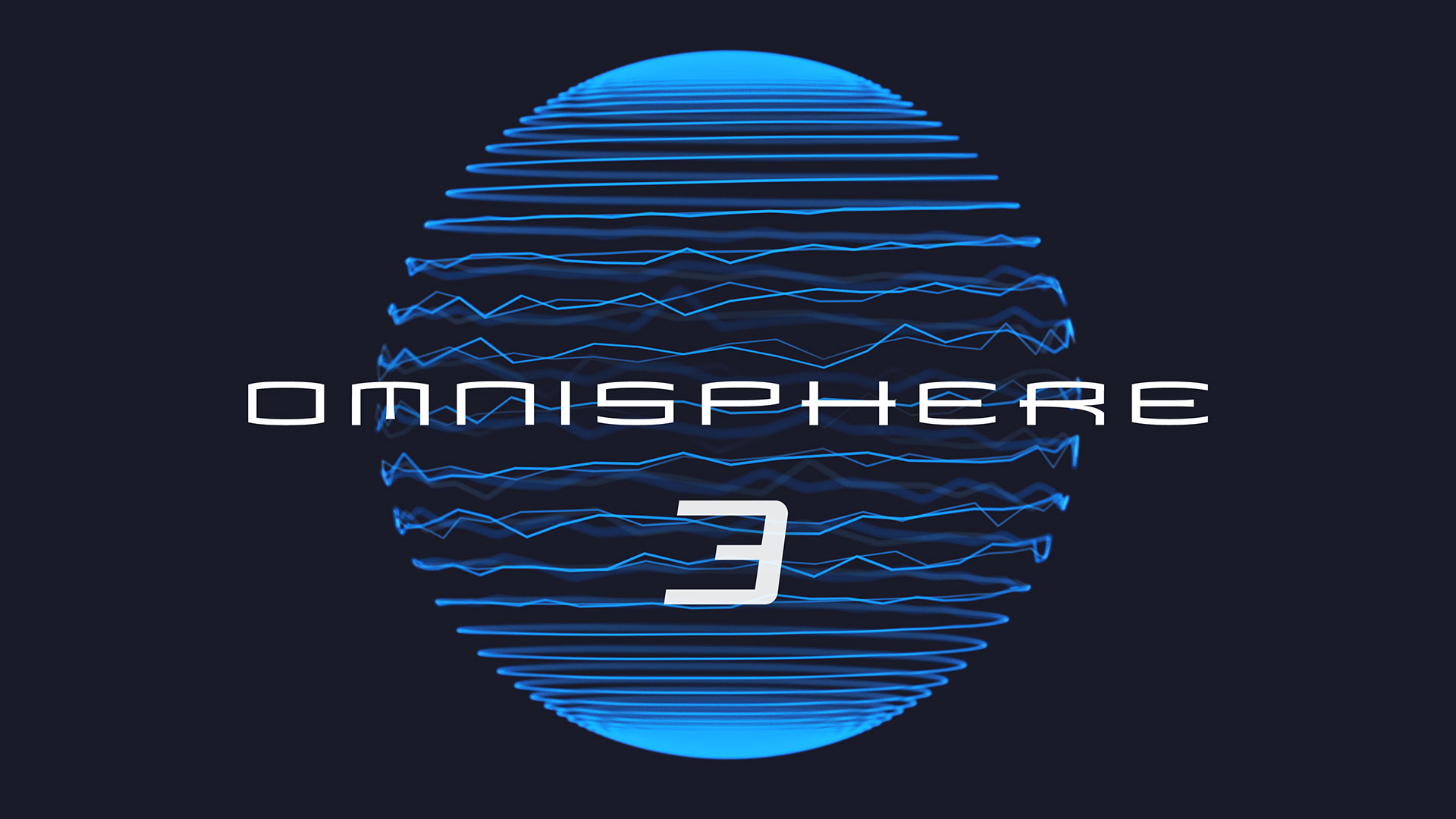
Omnisphere 2 — the most community-endorsed all-in-one premium synthesizer
- Developer: Spectrasonics
- Price: $499 (one-time, no subscription)
- Platforms: Windows, macOS
- Formats: VST, AU, AAX
Omnisphere 2 is built on a dual synthesis engine architecture combining sample playback with subtractive, FM, wavetable, and granular synthesis modes. Spectrasonics’ developer documentation confirms the engine supports over 14,000 factory patches, user-importable audio as oscillator sources, and the Hardware Synth Integration system covering hundreds of supported hardware synthesizers. The install footprint is approximately 64GB for the base library.
Community consensus on sound character — consistent across KVR forums, Gear Space, and r/synthesizers threads going back years — is that Omnisphere’s patches occupy a sonic territory described as rich, wide, and filmic. This character is attributed to the quality of the underlying sample sources and Spectrasonics’ proprietary psychoacoustic processing, rather than any single synthesis feature being technically unique. The community does not describe it as a “clean” or “surgical” synthesizer — it is deliberately lush and textured.
Best for: Film composers, sync licensing producers, ambient and cinematic electronic music producers.
→ Get Omnisphere 2 on Official Site
Core Features the Community Actually Uses
The Patch Library
The factory library is the primary reason most producers cite when explaining the purchase. At 14,000+ patches across pads, textures, leads, basses, arps, and cinematic FX, the breadth is not something a working producer exhausts quickly. Gear Space threads consistently document producers who have owned Omnisphere for five or more years and continue to surface patches they have not previously used.
What makes the library practically useful rather than just numerically large is Spectrasonics’ metadata tagging system. Patches are organized by genre, sound character, and use case, which makes auditioning realistic under deadline conditions — a detail that experienced producers highlight as a significant workflow advantage over rawer sound design tools.
Hardware Synth Integration
The Hardware Library is Omnisphere’s most technically distinctive feature and the one that receives the most specialist discussion on synthesis forums. Spectrasonics’ developer documentation confirms the system maps physical hardware synthesizers from Roland, Moog, Korg, Sequential, Waldorf, and many other manufacturers directly to Omnisphere’s software interface. This allows the physical controls of supported hardware to manipulate Omnisphere’s sound engine in real time.
This is not emulation — Spectrasonics is explicit that the Hardware Library uses specially recorded multi-samples of supported instruments as source material. The result, documented across KVR’s Instruments & Plug-ins forum, is a sound design workflow that extends supported hardware significantly beyond its standalone capabilities. No major competitor has replicated this integration at comparable scale.
Audio Import as Oscillator Source
Omnisphere allows any audio file to be loaded as an oscillator source and processed through its full synthesis architecture. The community consistently identifies this as one of Omnisphere’s most underused capabilities. Threads in r/edmproduction and r/synthesizers regularly surface examples of producers using this feature to transform field recordings, vocal samples, or external instrument recordings into hybrid synthesis sources — outputs that would be impractical to achieve through conventional synthesis alone.
Arpeggiator and Modulation System
Spectrasonics’ developer documentation describes Omnisphere’s arpeggiator as supporting step-sequenced patterns with individual step parameters, randomization, and deep integration with the modulation matrix. Professional audio press coverage consistently rates the modulation system favorably for its combination of depth and practical usability — a balance that synthesis-heavy tools like UVI Falcon achieve at the cost of a steeper learning curve.
Where Omnisphere Has Real Limits
No plugin at $499 should be purchased without a clear-eyed look at its weaknesses, and the community documents several honestly.
CPU and RAM demand is real. Multiple simultaneous Omnisphere patches, particularly with convolution reverb and complex modulation active, places significant load on system resources. This appears repeatedly in producer forums as a barrier for anyone on hardware more than a few years old.
It is not a bread-and-butter EDM tool. Producers primarily making aggressive EDM, hard techno, trance, or drum and bass consistently report that Omnisphere’s synthesis engine — despite its technical range — does not compete with dedicated wavetable tools like Serum or Phase Plant for the precise, cutting leads and basses those genres demand. The community does not position Omnisphere as a Serum replacement; they are different instruments for different purposes.
The learning curve for sound design is real. The patch library makes Omnisphere immediately usable without deep synthesis knowledge, but unlocking its full sound design capability requires committed time investment. Community consensus is that it rewards dedicated learning — but producers expecting fast results through deep synthesis work should set realistic expectations.
The 64GB install footprint requires planning. For producers working from laptops with limited SSD capacity, this is a practical constraint that warrants addressing before purchase rather than after.
The Community Verdict After Years of Real-World Use
The strongest argument against Omnisphere in 2026 is that free tools have matured. Vital covers sophisticated wavetable synthesis at no cost. Surge XT handles a wide synthesis range as open-source. These tools genuinely close the gap on raw synthesis capability — a point the community acknowledges directly.
The counterargument — documented consistently across KVR Audio, Gear Space, and Reddit — is that Omnisphere’s value is not reducible to its synthesis engine in isolation. The curated patch library, the quality of the underlying sample content, the Hardware Library integration, and the no-subscription pricing model together represent a body of work that free tools have not replicated as a complete package. KVR’s community sentiment, tracked across multiple “is Omnisphere still relevant?” threads over the past two years, remains that it is the most recommended all-in-one premium synthesizer for producers who work across multiple genres and need reliable, high-quality starting points.
The one-time $499 price, in a market where competing tools increasingly rely on subscription models, is a factor the community cites consistently as a significant long-term value differentiator.
Worth Upgrading To
Keyscape — the definitive keyboard instrument expansion for Omnisphere users
- Developer: Spectrasonics
- Price: $399
- Why upgrade: Omnisphere’s factory library includes keyboard and piano content, but Keyscape is Spectrasonics’ dedicated keyboard instrument — covering vintage electric pianos, uprights, grand pianos, clavichords, and rare historical keyboards at a sampling depth the Omnisphere factory content does not approach. Critically, Keyscape integrates directly into Omnisphere when both are installed, making its content available inside Omnisphere’s interface rather than requiring a separate instrument and workflow. For producers already invested in the Spectrasonics ecosystem, this integration is what the community most frequently cites as the deciding factor for the purchase.
→ Get Keyscape on Official Site
Full Comparison Table
| Plugin | Price | Type | Highlights | CTA |
|---|---|---|---|---|
| Omnisphere 2 | $499 | Hybrid synthesis + sample library | 14,000+ patches, Hardware Library, audio import, no subscription | Official Site |
| Keyscape | $399 | Keyboard instrument library | Deep sampling, integrates directly into Omnisphere | Official Site |
| Serum | ~$189 | Wavetable synthesis | Dominant in EDM sound design, large third-party preset market | — |
| Vital | Free | Wavetable synthesis | Fully capable free tier, active community, solid starting point | — |
| UVI Falcon | $349 | Hybrid modular synthesis | Deep scripting and modular architecture, steep learning curve | — |
How to Choose
- If you work in film scoring, sync licensing, or ambient production and need immediate access to thousands of professionally designed patches, Omnisphere is the community consensus recommendation — the no-subscription pricing makes lifetime value favorable compared to most competitors.
- If you primarily produce EDM, hard techno, or aggressive bass music, Serum or Phase Plant serve core sound design needs more directly; Omnisphere is a complement in those genres, not a primary instrument.
- If you already own Omnisphere and work regularly with keyboard sounds, Keyscape’s direct Omnisphere integration makes it the logical next investment — the content appears inside Omnisphere’s existing interface rather than adding a separate plugin to manage.
- If budget is the current constraint, Vital’s free tier covers modern wavetable synthesis competently — develop synthesis skills and workflow clarity there before committing to Omnisphere, and purchase when the specific demand is clear. Our best free synth VST plugins guide covers Vital, Surge XT, and 14 other capable free Omnisphere alternatives.
- If you own supported hardware synthesizers, the Hardware Library integration is a capability unique to Omnisphere with no comparable equivalent — for that workflow specifically, the purchase case is strong independent of the patch library’s value.
FAQ
Is Omnisphere a one-time purchase or does it require a subscription? Omnisphere is a one-time purchase at $499 with no ongoing subscription. Spectrasonics provides free updates within the Omnisphere 2.x generation. This model is consistently cited in community discussions — particularly as competitors move toward subscription pricing — as a meaningful factor in its long-term value calculation.
How much storage does Omnisphere require? The base Omnisphere 2 install requires approximately 64GB. Additional Steam Libraries and expansion content can increase this significantly. For producers working from laptops with limited SSD space, this is a practical constraint worth addressing before purchase.
Can Omnisphere replace Serum for EDM production? The community consensus is no — not as a direct replacement. Omnisphere includes wavetable synthesis capability, but its design priorities are different. Serum and similar tools are optimized for precision sound design and the tight, aggressive character common in EDM and bass music. Omnisphere is built for depth, texture, and cinematic character. Many producers own both for different purposes.
Does Omnisphere work with hardware synthesizers? Yes. The Hardware Library, documented in Spectrasonics’ developer material, supports hundreds of hardware synthesizers from major manufacturers including Roland, Moog, Korg, Waldorf, and Sequential. Supported hardware can be used to control Omnisphere’s interface directly, and the library includes specially recorded multi-samples of supported instruments as synthesis sources.
Is Omnisphere worth buying if you’re early in your production career? Community sentiment is split. The patch library makes Omnisphere immediately usable without deep synthesis knowledge, which is a genuine accessibility advantage. However, $499 is a significant commitment, and the community consistently recommends building synthesis fundamentals with a free tool like Vital first — both to develop a working mental model and to confirm that Omnisphere’s specific sonic territory aligns with your production direction before spending at that level.
Related Guides
- 10 Best Free Bass Synth VST Plugins in 2026
- 12 Best Vintage Synth VST Emulations in 2026 (Moog, Roland, Oberheim)
- 10 Best Compressor Plugins for Drums in 2026 (Punch, Glue, Transient Control)
- 10 Best Free Drum Machine & Beat VST Plugins in 2026
- 10 Best Free Guitar Amp Simulator VST Plugins in 2026
Final Thoughts
Omnisphere is not the right purchase for every producer — but for film composers, sync licensing producers, and anyone building a long-term toolkit around cinematic and atmospheric sound design, the community’s position across KVR, Reddit, and professional audio press has been stable and consistent for years: it is the most comprehensively useful premium synthesizer at its price point, and its no-subscription model makes the long-term value case difficult to argue against. If your work consistently demands production-ready pads, evolving textures, and high-quality starting points across genres, the $499 investment is well documented as earned.
→ Get Omnisphere 2 on Official Site
This post contains affiliate links. We may earn a small commission at no extra cost to you.
Buying a bundle? See our Plugin Bundle Price Comparison — 12 bundles ranked by cost per plugin.
This post contains affiliate links. We may earn a small commission at no extra cost to you.