Best Serum Alternatives 2026: Wavetable Synths Worth Buying
TL;DR: Phase Plant is the top pick for producers who’ve outgrown Serum’s fixed architecture — its modular signal path and Kilohearts Snapin ecosystem represent a genuine capability upgrade. Pigments wins for versatility, covering wavetable, granular, and analog in a single dual-engine instrument. Serum 2 remains the ecosystem benchmark, but in 2026 it’s only the obvious choice if preset interoperability is non-negotiable.
Quick Picks at a Glance
| Plugin | Price | Best For | Get It |
|---|---|---|---|
| Phase Plant | $149 | Modular routing, deep sound design | Official Site |
| Pigments | $199 | Multi-engine versatility, visual modulation | Official Site |
| Spire | $119 | EDM, trance, fast genre production | Official Site |
| Serum 2 | $189 | Industry-standard preset ecosystem | Official Site |
Introduction
The best Serum alternatives paid 2026 aren’t trying to clone Serum — they’re doing things Serum structurally cannot. Phase Plant ships a fully modular signal path where Serum has a fixed oscillator-filter chain. Pigments layers two synthesis engines (wavetable, granular, harmonic, virtual analog, sample) in a single patch. Spire produces the kind of dense, full-spectrum EDM leads that KVR’s community has documented as arriving with less initial effort than any competitor. The conversation in producer circles has shifted: Serum is no longer the automatic recommendation, just the safest one.
This matters in 2026 because Serum 2’s release reset pricing expectations while the alternatives matured significantly. Pigments reached version 5. Phase Plant’s Snapin ecosystem became a serious reason to consider the Kilohearts subscription model. Threads on r/edmproduction and r/synthrecipes now routinely feature side-by-side comparisons where Phase Plant and Pigments come out ahead on specific use cases — not as budget concessions but as deliberate choices. That community shift is what this guide documents.
This article is written for producers who already understand synthesis and are making a deliberate $100–200 purchase decision. It covers Phase Plant, Pigments, and Spire as the three strongest paid alternatives, with an honest comparison to Serum 2 where it genuinely still leads. If you’re expecting a verdict that just tells you “Serum is still king,” this isn’t that guide.
Paid Serum Alternatives Worth Your Money
Phase Plant — the modular-architecture pick for producers who think in signal flow
- Developer: Kilohearts
- Price: $149 (standalone); available as part of Kilohearts Toolbox subscription
- Platforms: Windows, macOS
- Formats: VST2, VST3, AU, AAX
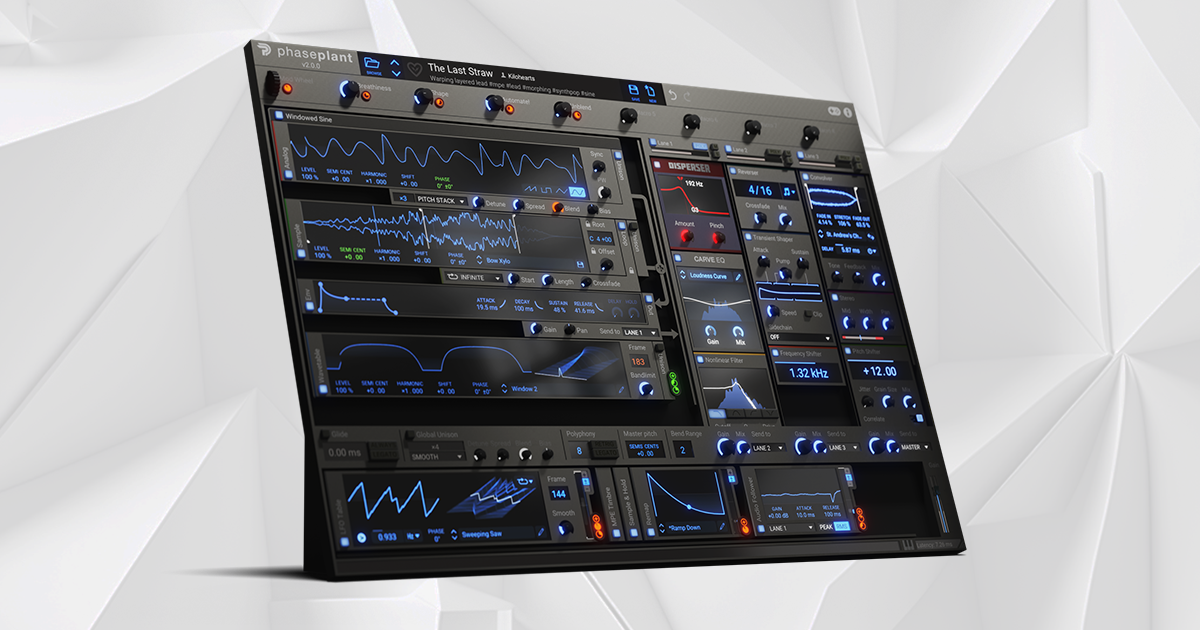
Phase Plant’s core differentiator is structural, not sonic. Kilohearts’ developer documentation confirms that every element of a patch — generators, effects, modulators — lives in a fully configurable modular signal path. You are not working around a fixed oscillator-filter-envelope chain; you are building one. Generators include wavetable, phase distortion, analog, sample, and noise sources, each stackable in any configuration. Effects are Kilohearts Snapins, which means the same processing modules work inside Phase Plant patches and as standalone channel strip effects across your DAW — an ecosystem integration no other synth in this comparison offers.
The KVR community consistently describes the learning curve as real but front-loaded. Producers comfortable with signal flow and modular thinking report that the blank canvas becomes an advantage after a few sessions. Those accustomed to preset browsing in Serum report more friction initially. Reddit’s r/synthrecipes community regularly posts Phase Plant patches covering territory that Serum cannot address in a single instance — hybrid wavetable-phase distortion architectures, sample-layered FM structures — and the documentation of those patches confirms the modular depth is genuine, not theoretical.
The Kilohearts ecosystem argument is worth taking seriously. If you already use Kilohearts effects on your channels, Phase Plant’s Snapin compatibility makes the purchase compound. If you don’t, it’s a synth that sells itself on architecture alone — which is still a strong argument for serious sound designers.
Best for: Sound designers and producers who’ve hit the ceiling of Serum’s fixed architecture and want modular routing without moving to a hardware-style modular environment.
Pigments — the multi-engine instrument that outclasses Serum on breadth
- Developer: Arturia
- Price: $199 full price; regularly discounted to $99 during Arturia promotions
- Platforms: Windows, macOS
- Formats: VST2, VST3, AU, AAX
Pigments’ headline advantage over Serum is its dual-engine architecture. Arturia’s developer documentation confirms that Pigments allows two independent synthesis engines to run simultaneously in a single patch, selectable from wavetable, virtual analog, harmonic, granular, and sample types. Layering a granular texture against a virtual analog bass in one instance — something that requires two Serum instances and manual blending in your DAW — is a native operation in Pigments. For CPU-constrained sessions, this is a functional argument, not just a feature list.
KVR Audio’s community discussions and r/synthrecipes threads consistently highlight Pigments’ visual modulation interface as its most approachable quality. Modulation assignments are color-coded and drawn directly on the synthesizer’s controls — a design choice that makes complex routing legible at a glance. Producers new to deep modulation report that Pigments surfaces what Serum’s mod matrix buries. The depth is comparable; the discoverability is better.
The preset library shipped with Pigments earns consistently positive reviews across producer communities for ambient, cinematic, and contemporary electronic genres. EDM-specific coverage is present but less dominant than in Spire. Arturia’s update cadence for Pigments has been among the most active in the industry, which r/synthesizers threads note favorably relative to Serum’s slower iteration pace.
Best for: Producers who want a single synth covering wavetable, granular, and analog in one purchase, or who find Serum’s mod routing opaque.
Spire — the EDM workhorse with a decade of community validation
- Developer: Reveal Sound
- Price: $119
- Platforms: Windows, macOS
- Formats: VST2, VST3, AU, AAX
Spire occupies a different position than Phase Plant or Pigments. It is not competing on architectural depth or multi-engine breadth. KVR Audio’s community threads on Spire, spanning years of discussion, describe a consistent characteristic: its oscillator section produces a dense, full-spectrum sound with minimal tweak time — a quality attributed to its combination of wavetable, spectral, and FM synthesis modes across four oscillators, as confirmed in Reveal Sound’s developer documentation. The synthesis architecture is more constrained than Serum’s, let alone Phase Plant’s, but the output character for EDM applications is what the community cites as its ongoing value.
Reddit’s r/edmproduction consistently describes Spire’s factory preset quality for trance, progressive house, and commercial EDM as production-ready in a way that takes more time to achieve in Serum or Phase Plant. The trade-off is also consistent across these discussions: Spire’s modulation system is less deep than Serum’s, and the interface has seen fewer major updates than Pigments or Phase Plant. Producers who report using Spire long-term are predominantly genre-focused rather than experimental sound designers.
At $119, Spire is the lowest-priced option in this comparison and the strongest value proposition specifically for producers whose output is genre-defined EDM. For any other use case, Phase Plant or Pigments offer more return on the investment.
Best for: EDM, trance, and progressive house producers who prioritize workflow speed and a dense, immediately usable sound character over modulation depth.
Worth Upgrading To
Phase Plant — when modular routing becomes non-negotiable
- Developer: Kilohearts
- Price: $149
- Why upgrade: Producers who start with preset-focused synths and eventually need synthesis architectures that fixed-chain instruments cannot build — hybrid oscillator stacks, inline modular effects, multi-path signal routing — will find Phase Plant unlocks categories of sound that Serum and Pigments cannot replicate. The Snapin ecosystem extends the investment beyond the synth itself.
Pigments — when one synthesis engine isn’t enough
- Developer: Arturia
- Price: $199
- Why upgrade: Serum’s single-engine architecture means patches that require layered textures from different synthesis types need multiple plugin instances. Pigments handles in one patch what would otherwise require two or three Serum instances running simultaneously — a real argument on CPU-constrained systems, and a cleaner workflow regardless of hardware.
Spire — when genre production speed matters more than depth
- Developer: Reveal Sound
- Price: $119
- Why upgrade: The per-patch time investment for genre-accurate EDM sounds is lower with Spire than with any other synth in this comparison. Producers on deadline who need usable trance leads, progressive bass lines, and pad textures without starting from scratch consistently cite this speed as Spire’s central value proposition.
Serum 2 — the ecosystem benchmark, when interoperability is the requirement
- Developer: Xfer Records
- Price: $189
- Why upgrade: None of the alternatives replicate Serum’s third-party preset ecosystem, tutorial infrastructure, or Splice integration. If you collaborate with producers who share Serum patches, purchase commercial preset banks, or rely on the volume of Serum-specific educational content available online, Serum 2 is the only option that preserves that workflow.
Full Comparison Table
| Plugin | Price | Type | Highlights | CTA |
|---|---|---|---|---|
| Phase Plant | $149 | Modular (wavetable, analog, sample, phase distortion) | Fully modular signal path, Snapin ecosystem, blank-canvas architecture | Get It |
| Pigments | $199 | Multi-engine (wavetable, VA, granular, harmonic, sample) | Dual-engine patches, visual mod routing, broad genre coverage | Get It |
| Spire | $119 | Wavetable + FM + spectral | Dense EDM sound character, fast genre workflow, four multi-mode oscillators | Get It |
| Serum 2 | $189 | Wavetable | Industry-standard preset ecosystem, Splice integration, largest tutorial library | Get It |
How to Choose
- If you want maximum synthesis flexibility and are comfortable building patches from scratch, go with Phase Plant. Its modular architecture handles scenarios Serum’s fixed signal path cannot, and the Kilohearts Snapin ecosystem means the investment compounds across your entire channel strip.
- If you produce across multiple genres and want one synth covering wavetable, granular, and analog in a single purchase, go with Pigments. The dual-engine design and visual modulation interface make it the most versatile single instrument in this comparison.
- If you produce EDM, trance, or progressive house and workflow speed matters more than sound design depth, go with Spire. KVR’s community consensus is that its preset quality and sonic density for genre production is the strongest in its price tier.
- If you need to open existing Serum patches, work with collaborators who share .fxp files, or access the commercial Serum preset ecosystem, Serum 2 is the only option. None of the alternatives offer format compatibility.
- If you’re choosing between Pigments and Serum 2 on value, Pigments regularly drops to $99 during Arturia promotions — making it the stronger purchase when timed to a sale cycle.
FAQ
Is Phase Plant a like-for-like Serum replacement? Phase Plant can reproduce everything in Serum’s scope — wavetable oscillators, subtractive synthesis, deep modulation — and extends significantly beyond it with modular routing. It does not import Serum presets. Producer community discussions describe the transition as a meaningful learning investment that pays off for serious sound designers; less worthwhile for producers whose workflow is primarily preset-based.
Does Pigments work for EDM production specifically? Yes, with caveats. Pigments is most frequently cited in community discussions for ambient, cinematic, and contemporary electronic production, but Arturia ships EDM-oriented preset banks and r/synthrecipes regularly documents Pigments-based EDM patches. It handles bass, leads, and pads across genres competently; it’s simply not optimized for genre EDM the way Spire is.
Is Spire still worth buying in 2026 given its slower update cadence? KVR community threads consistently note that Spire’s core sound engine — particularly its lead and bass characteristics for EDM — holds up for genre production regardless of update frequency. It is not the choice for experimental sound design or producers who need the latest synthesis features. For its target application it remains competitive at its price point.
Can any of these synths open Serum presets? No. Serum’s preset format carries synthesizer-specific parameters that are not portable to Phase Plant, Pigments, or Spire. If third-party Serum preset libraries represent a significant part of your workflow, none of these alternatives can replicate that without manual patch reconstruction.
Which synth has the strongest factory preset library? Community consensus splits by genre: Spire’s factory presets are most immediately deployable for EDM and trance production; Pigments covers the broadest range of styles including ambient, cinematic, and electronic; Phase Plant’s included patches demonstrate its modular capabilities but are most valuable to producers who intend to build their own sounds. Serum 2’s preset library is the largest in absolute terms when third-party packs are included.
Related Guides
- Best Synth Plugins 2026 — Ranked: Free & Paid VSTs for Every Style
- Serum VST Review 2026: Is It Still the Best Wavetable Synth?
- Phase Plant vs Serum: Which Wavetable Synth Wins in 2026?
- Vital Synthesizer Review 2026: The Best Free Synth?
- Best Synth VST Plugins 2026: Top 12 Picks Ranked
Final Thoughts
Phase Plant is the strongest paid Serum alternative for producers who’ve hit the ceiling of fixed-architecture synthesis — its modular routing is a genuine capability upgrade, not a lateral substitution. Pigments is the better call when multi-engine versatility matters more than architectural freedom. Serum 2 holds the ecosystem advantage, but in 2026 that advantage only translates into a purchase recommendation if preset interoperability is an active workflow requirement rather than a theoretical comfort.
→ Get Phase Plant | → Get Pigments | → Get Spire
This post contains affiliate links. We may earn a small commission at no extra cost to you.
This post contains affiliate links. We may earn a small commission at no extra cost to you.